
The hospital room was too quiet.
Not peaceful quiet…no, it was the kind that pressed in on your ears. The kind that made you hear things that weren’t there. A humming of fluorescent lights. The slow mechanical breathing of a machine in the corner of the room. The distant squeak of rubber soles against the floor down the hallway.
Ethan stared at the ceiling.
White. Blank. Endless.
He always had the instinct to fill the silence.
He was the friend who texted first after an argument. Tension with those he loved made his chest feel tight. He remembered how people took their coffee. Always showed up with soup when a friend was sick. At parties he would stay after everyone else left, stacking folding chairs or wiping down counters. Because leaving while work remained always felt so wrong.
If someone needed a ride at midnight, Ethan was already grabbing his keys. If a friend casually mentioned needing help moving next weekend, he would clear his schedule and volunteer. He answered calls during dinner, during showers, at work, and half asleep at two in the morning.
And people loved him for it…or at least, that is what he believed.
Somewhere along the way, being needed began to feel the same as being valued. But the harsher truth was, Ethan learned long ago that peace could disappear quickly.
As a child, he could tell what kind of evening it would be from how loud the front door closed. If it slammed too hard, he knew to staying quiet was the safest. If his father’s footsteps were heavy coming down the hallway, Ethan would turn the television volume lower before it was asked of him. If cabinet doors started slammed shut in the kitchen, he would drift toward the living room and start soothing the edge in the room with a funny story.
“Did you hear what happened to Mr. Donnelly at school today?” he’d blurt out suddenly, launching into exaggerated impressions of his teachers before anyone could stop him.
Sometimes it worked.
His mother would laugh despite herself, covering her mouth with the dish towel. His father’s expression would loosen for thirty seconds. The room would unclench just enough for everyone to breathe again.
So Ethan kept performing.
He learned how to tell stories at dinner with perfect timing. Learned how to make himself agreeable. Easy. Pleasant. He became the child who never complained when plans changed. The teenager who said “it’s fine” before anyone had the chance to feel guilty.
He learned moods before he learned multiplication tables.
The scrape of his father’s chair against the floor. His mother washing dishes too loudly, water running harder than necessary. The silence between them stretching through the house like a wire ready to snap.
Some children learn how to take up space.
Ethan learned how to soften it.
By ten, he knew how to make adults laugh at family gatherings. By twelve, teachers described him as “mature” and “thoughtful,” the kind of boy who helped pass out papers without being asked. By fifteen, he understood something dangerous: people were warmer with him when he made their lives easier.
So he became useful.
Helpful.
Low maintenance.
The friend who stayed behind helping clean after parties while everyone else left. The boyfriend who always drove because “it’s no problem, really.” The son who learned to need very little himself.
And over time, usefulness stopped being something he did.
It became who he was.
Years later, he would still feel panic when someone sounded disappointed in him. Always apologizing for things that were not his fault. He ran in himself down, trying to please everyone. Often confusing exhaustion for love.
The accident was on a Thursday.
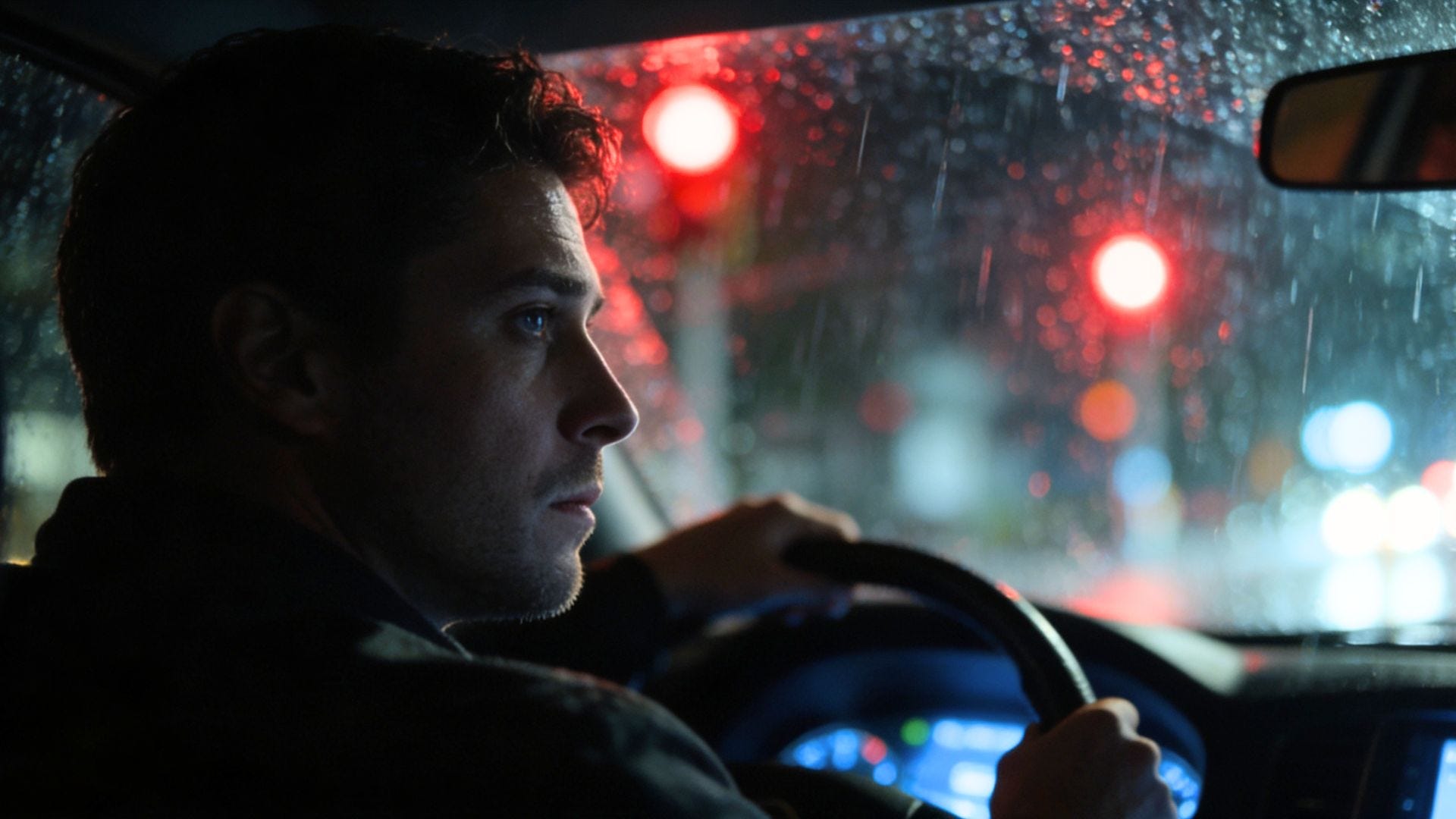
Rain pinged against the windshield beneath a red traffic light. An old song played softly through the speakers. Ethan tapped his fingers absently against the steering wheel and thought about the groceries he still needed to pick up before he got home.
Then headlights appeared too fast in his peripheral vision.
Then….
metal folding into metal.
Glass exploding outward like ice shattering across pavement. The violent sound of impact swallowing the air from his lungs. His body jerked sideways. Pain shot through his ribs as the car spun once…maybe twice…before slamming hard against the divider.
For a few suspended seconds, there was nothing.
No thoughts.
No sense of time.
Just the smell of smoke and deployed airbags. The sharp sting of blood somewhere near his eyebrow. A ringing in his ears so loud it drowned out everything else.
Then came the realization.
Oh my God.
The man in the other car.
Somewhere someone was screaming. Tires screeched against wet pavement. Ethan tried to inhale, but the breath caught halfway. A hot wave of pain seared through him, sharp enough to make his stomach turn.
He fumbled for his phone with trembling hands. Remembered staring at the cracked screen while rainwater leaked slowly through the broken windshield onto his jeans.
This is it, he thought.
Not dramatically.
Not poetically.
Just with the subtle animal fear of someone suddenly aware of how fragile their human body is.
Back in the hospital room, the phone buzzed again in his hand. The screen lit up. For one irrational second, relief moved through him.
Ethan blinked slowly.
“Oh my God, are you okay?? I just saw your sister’s post. I’m stuck at work right now but I’ll try to come by tonight.”
A few minutes later:
“The kids are with me unexpectedly. I’m so sorry. Maybe tomorrow?”
Then another message.
“Dude that’s insane. Glad you’re alive.”
Another…“I’ve had the craziest week but I’ll definitely stop by soon.”
And beneath those messages, almost immediately, came the familiar requests.
“Also… when you feel up to it, can you still look over that contract for me?”
“Can you send me Brian’s number? Pretty sure you’re the only one who has it.”
Outside his hospital window, rainwater slid slowly down the glass unevenly. Somewhere down the hall, someone laughed a little too loud at a sitcom playing on television.
The physical pain settled deeper as the adrenaline faded.
Every breath was painful against his ribs like broken glass. His shoulder burned beneath the sling, throbbing hard enough to keep him from sleeping. Bruises darkened hour by hour, blooming across his body like an awakening he hadn’t fully processed.
But somewhere beneath the physical pain sat another ache entirely. One harder to locate. Harder to medicate.
The physical pain was sharp. But the loneliness inside it was harder to name. And lying there in that sterile room, Ethan understood something he had spent years softening into excuses: behavior had always been the clearest language anyone spoke.
The world had almost lost him.
And still, life outside the hospital kept moving as though nothing had happened. For a while, he kept believing someone would walk through the door. Every time footsteps slowed near his room, hope lifted instinctively inside his chest.
Then it would pass.
A nurse.
A janitor.
Someone visiting the patient across the hall. The first night, he told himself people were busy. The second night, the excuses sounded thinner. By the third day, the empty chair beside his bed felt more honest than the messages on his phone.
They weren’t coming.
And for the first time in his life, Ethan began wondering if there was a difference between being loved…and simply being useful.
Part 2: The Empty Hospital Chair
Because empty rooms have a way of making things undeniable.
A great and moving read. I almost related to Ethan's story, though not in exactly the same way. I spent most of my life helping others but never expecting reciprocity, and solitude has never bothered me, but the deeper realization about relationships and what difficult moments can reveal about them resonated with me. The hospital room wasn't just a place of recovery, it became a place of clarity. Thank you for writing such a thoughtful piece, looking forward to part 2.
For someone who grew up with a short and bad tempered dad this was too accurate--
It's sad that people can be reduced to what they give rather than the person they are, thank you for bringing that point across beautifully :) have a sub!